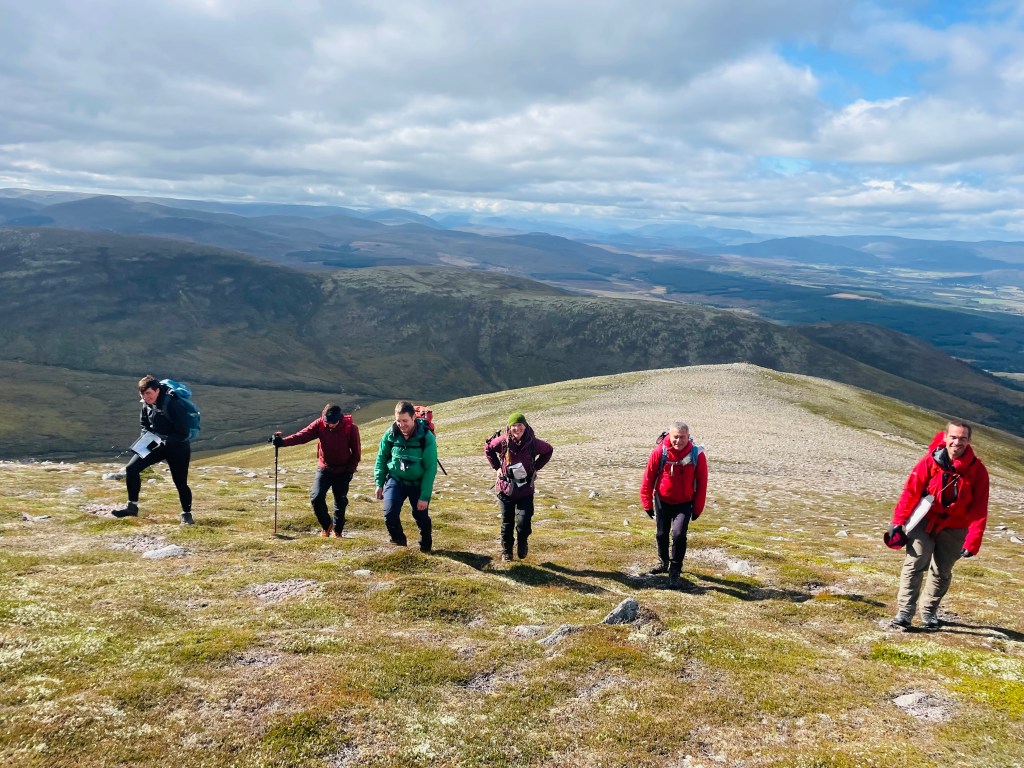
One of the most fundamental skills required for hill walking is being able to move safely and efficiently across rough terrain. While most mountains have well trodden paths this does not mean that they are always easy to negotiate. Steep ascents and descents, boulder fields and bogs are all part and parcel of most hill walking routes. Ideally, we want to be making the most of our individual physical abilities in order to cross the varied types of ground we encounter. We certainly need to listen to our bodies before, during and after hill walking.
If you are new to hill walking, as with most physically exerting activities, it is best to build up experience gradually to avoid overwhelm, exhaustion or injury. Begin by following shorter simpler routes and over time increasing distance and difficulty in small increments. This will build confidence and instil an awareness of your physical and mental capabilities.
So what elements of our physical body should we consider before embarking on hill walking? Some questions to ponder:- What is our level of fitness? Do we know for sure that our cardiovascular system can cope with several hours of walking on flat terrain before trying out a short climb? If you haven’t exercised in a while it might be a good idea to build up a little stamina and endurance before testing your heart and lungs on the hills. Swimming and regular walking are excellent ways to strengthen the heart and prepare the respiratory system for long exertions.
Also, if you know you have a niggling injury or weakness perhaps it would be a good idea to work on stretches and strength building exercises to get your body prepared for longer mountain days. The last thing you want is an existing injury flaring up when you are half way up a mountain, or developing a new one. One of the most common hill walking injuries is ankle sprains so do pay attention to any sensitivities in this area. The internet is a fantastic source of free Yoga, Pilates and other helpful stretching programmes to maintain and build muscle strength.
A simple thing to be aware of is posture. As you walk, keep your head up and your eyes looking a few metres ahead. Although if you are navigating boulders or steep ground then it’s best to always check before placing your next foot down. Hands should always be free to assist should you need them and when the path is bumpy make sure you are lifting your knees a little higher than usual to avoid tripping. Rucksacks can impact posture so investing in a well-fitted lightweight pack to prevent shoulder and back strain is a good idea, and pack light – having a heavy load to bear saps energy.
When tackling steep ascent and descent it is best to maintain a good centre of gravity. Keep your weight over the load bearing leg. Traversing diagonally is also a good way to conserve energy on the slopes. Most paths take the route of least resistance with zig zagging routes which are less lung busting and easier on the quads.
With the above in mind, the clear focus and consideration for a long day out in the hills is to ensure you avoid injury and don’t run out of steam! There is nothing worse than feeling depleted when you are out in the middle of nowhere if you are miles away from your starting point. Pace yourself.
A good gauge of pace is being able to hold a conversation while you are walking. External factors will sometimes affect your ability to walk and talk, such as wind or steep ground, but if you find yourself out of puff the chances are you will quickly run low on energy reserves. Take a break and reset with a slower pace.
If you are walking in a group, a good rule of thumb is to allow the slowest member to set the pace. Rather than be frustrated, most fast walkers will be delighted to slow down and enjoy the scenery. Hill walking is to be enjoyed, not endured. Think more tortoise than hare, be careful and only venture out if you are feeling tip top!
 BONNIE TRAILS